
The Opportunity
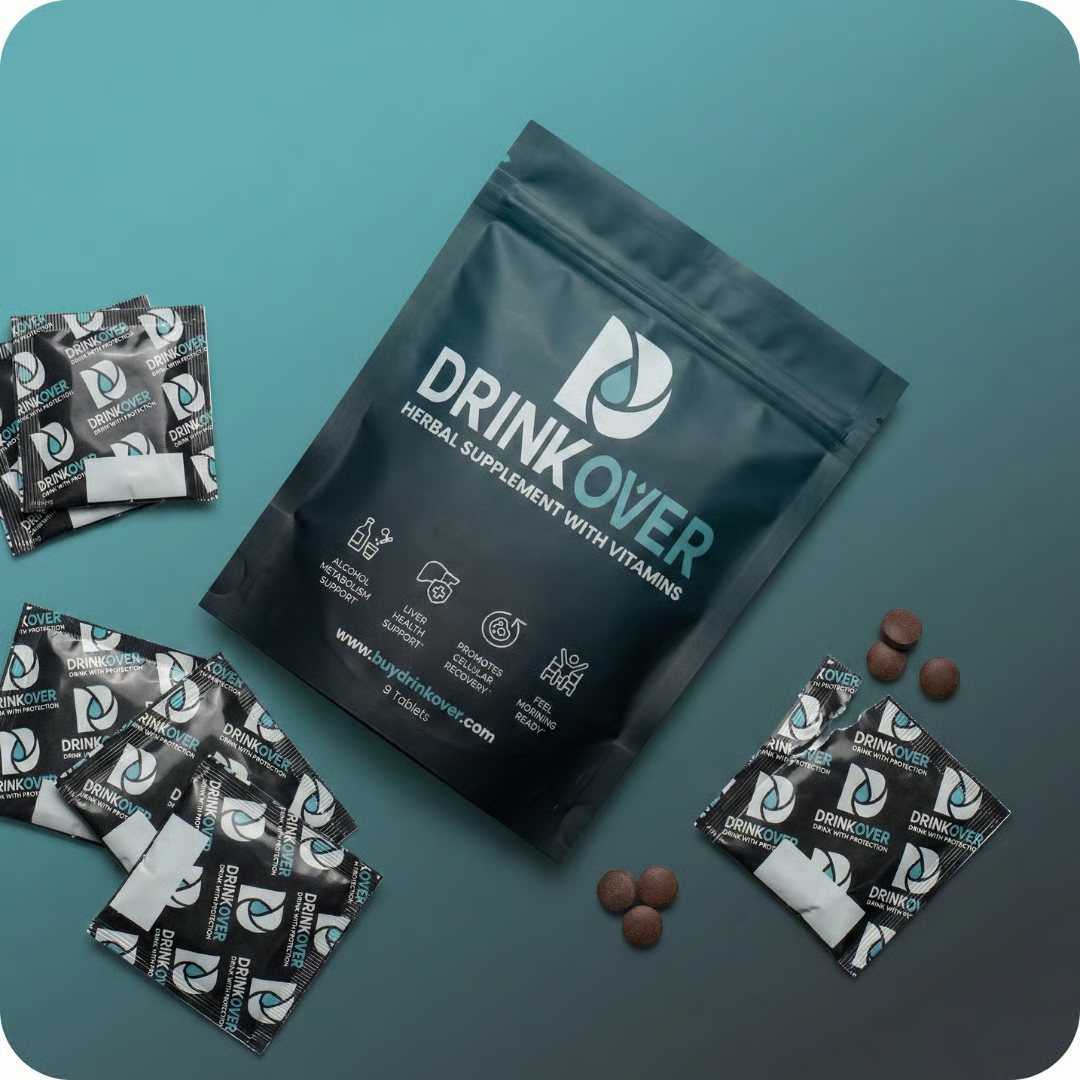
DrinkOver makes a liver-health supplement for social drinkers - people who go out two to four times a week and want to perform the next morning. The product is backed by 200+ peer-reviewed studies on its active ingredient, and the founder had already surveyed 150 free-sample recipients to identify early barriers: effectiveness doubt and ingredient skepticism topped the list.
But DrinkOver was preparing to scale, and the team had three open questions they couldn't answer with survey data alone.
1. Should the lead message focus on morning performance or liver protection?
2. Does saying "patented ingredient" build trust or trigger skepticism?
3. Should they price as a monthly subscription or per occasion?
These weren't hypothetical questions. The answers would determine packaging copy, website messaging, and the entire pricing model. DrinkOver needed direct signal from the exact buyers they were targeting and they needed it before their next product run.
Traditional research wasn't an option. Agency quotes came back at $20K+ with six-week timelines. For an early-stage brand moving fast, that's a non-starter.
What Convo Uncovered
Convo ran three AI-moderated focus group sessions over two days with young professionals in finance and consulting - household incomes between $100K and $200K, all social drinkers. Participants engaged in guided discussions through Convo's platform.
The findings were immediate and decisive.
The lead message wrote itself. 90% of participants chose "wake up at 100%" over liver protection. Morning performance connected to something they already cared about — showing up sharp at work the next day. Liver health felt abstract and clinical. As one participant put it: "Own your morning sounds better. The other one just kinda sounds like propaganda."
The trust claim wasn't as effective. "Patented ingredient" didn't land as credible - it landed as marketing. Multiple participants said they'd need to see actual studies before believing the claim. DrinkOver has 200+ peer-reviewed studies behind its active ingredient, but saying "patented" actually worked against them with an audience that evaluates claims professionally.
The pricing frame poisoned purchase intent. This was the most visceral reaction in the study. When participants heard "$80 per month," they recoiled - not because of the dollar amount, but because monthly framing recast them from "someone who takes care of themselves" to "someone who pays for a drinking habit." One participant called it "basically your subscription to pay for alcoholism." But $2.67 per serving? That anchored against the price of a single drink and felt like nothing.
The study also surfaced an unexpected insight: every participant named a free sample or small trial as the single thing that would get them to try DrinkOver. Bar distribution at $3 per serving reversed resistance entirely: removing cost, context, and social barriers in one move.
The Results Provided
DrinkOver walked away from this study with a fundamentally repositioned go-to-market strategy — not based on internal assumptions, but on direct signal from the people they're selling to.
The full study: transcripts, themes, and recommendations — was searchable in DrinkOver's Convo portal within 48 hours of the final session. Two follow-up studies were scoped before the readout was finished: a messaging A/B test across price points, and qualitative sessions with bartenders on format and feasibility.
